Mapping Reel Expansion Patterns and Their Effects on Multiplier Stacking in Digital Cluster Games
Erik Simmons · Aug 31, 2026
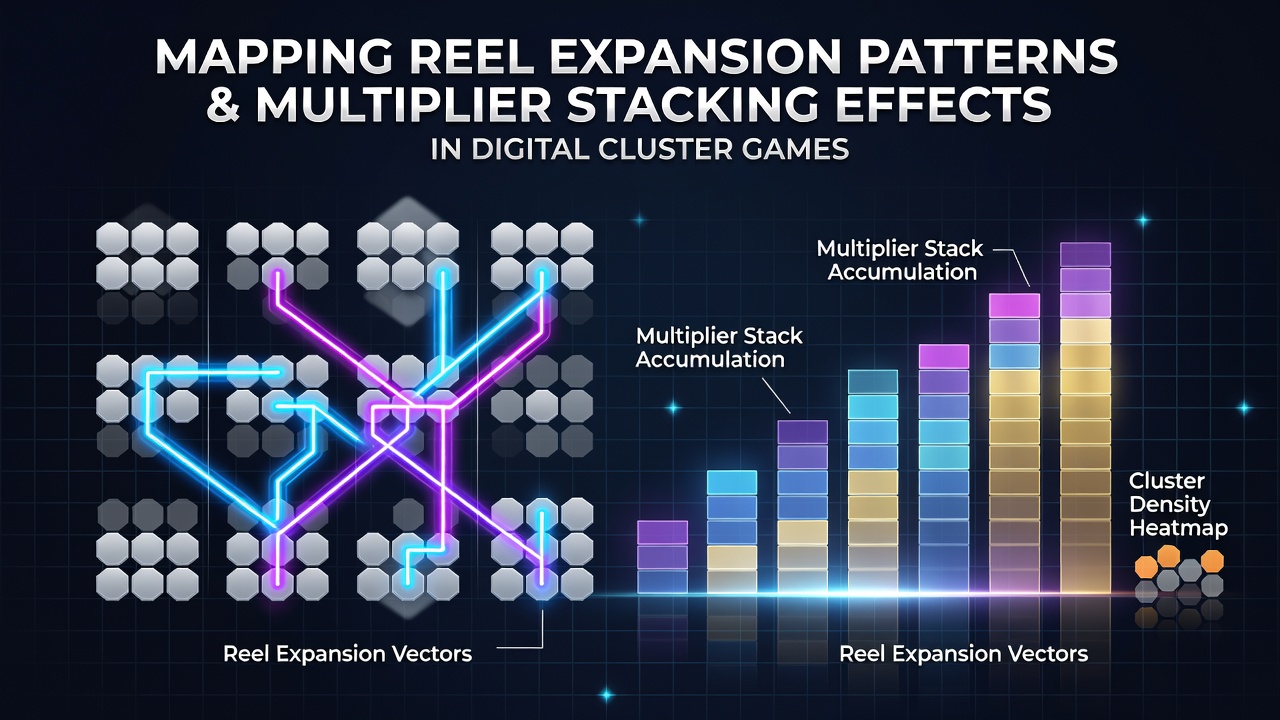
Mapping Reel Expansion Patterns and Their Effects on Multiplier Stacking in Digital Cluster Games
Digital cluster games operate through reel systems that expand according to defined patterns, and these patterns directly influence how multipliers accumulate during play sequences. Observers note that expansion follows mathematical rules tied to symbol adjacency, where clusters trigger reel growth in vertical or horizontal directions while multipliers layer on top of those expanding areas.
Core Mechanics of Reel Expansion in Cluster Formats
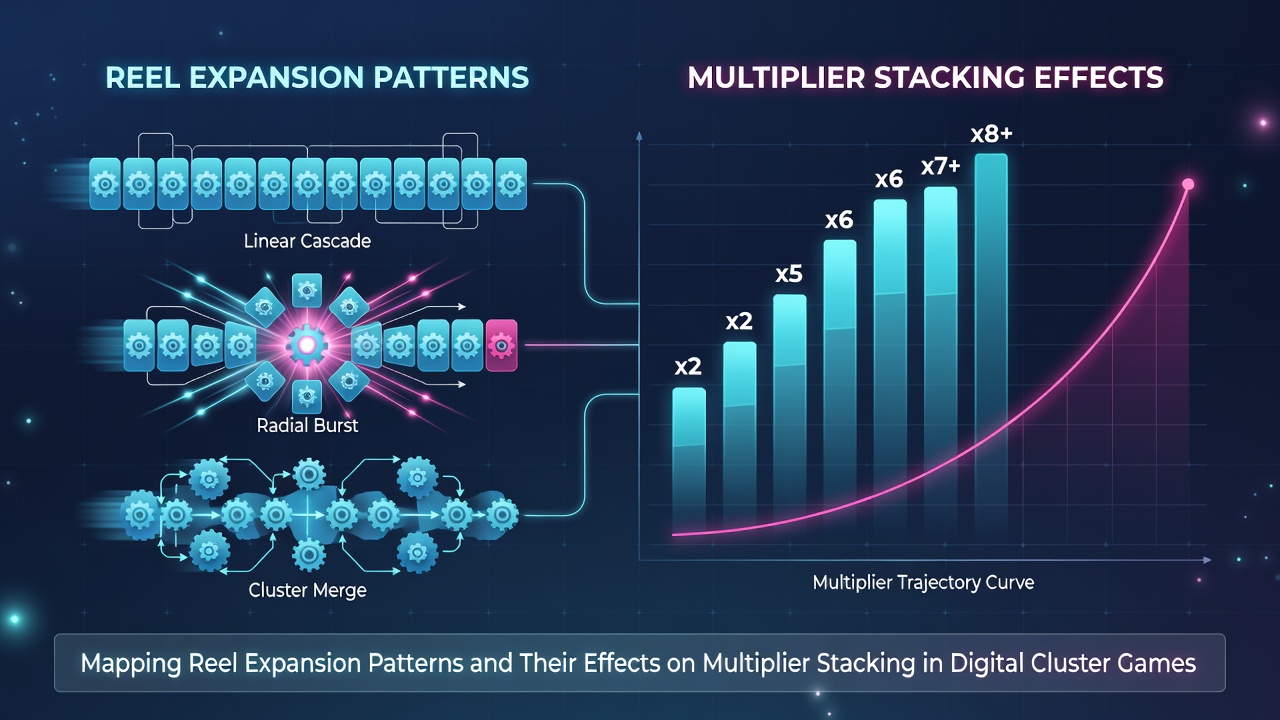
Reel expansion begins when a minimum cluster size activates, typically four to nine matching symbols in connected positions, and this activation causes adjacent reels to add rows or columns according to preset algorithms. Data from industry reports compiled through August 2026 shows that expansion patterns divide into linear, cascading, and grid-based types, each producing distinct multiplier opportunities because linear patterns extend reels in straight lines while cascading patterns allow repeated expansions within the same spin cycle.
Those who analyze game code find that linear expansions favor consistent but modest multiplier growth, whereas grid-based patterns create larger surface areas for symbols to land and stack multipliers higher. Researchers at the International Gaming Institute have documented how these differences alter payout distributions across thousands of simulated spins.
Multiplier Stacking Sequences and Pattern Interactions
Multiplier stacking occurs when expansion creates overlapping zones where successive multipliers apply to the same cluster outcome. Studies indicate that certain expansion patterns produce vertical stacking, where multipliers build upward across added rows, while others generate horizontal stacking across widened reels. The interaction matters because vertical stacking tends to compound values faster during single clusters, yet horizontal patterns distribute multipliers across more positions and increase the frequency of smaller stacked totals.
One analysis of cluster game engines revealed that expansion triggers occurring in the middle reels create higher stacking potential than those on edge reels, since central positions allow multipliers to influence both left and right directions simultaneously. Figures from regulatory data in Nevada confirm these positional effects hold across multiple titles released between 2023 and 2026.
Documented Patterns Across Game Architectures
Three primary expansion patterns appear repeatedly in current cluster titles. The first follows a wave model where expansion spreads outward from the initial cluster in concentric steps, allowing multipliers to accumulate in rings around the core symbols. The second uses directional bias, expanding reels only toward one side based on symbol orientation, which limits stacking depth but increases directional predictability. The third employs random seed expansion, where additional rows or columns activate according to probability tables rather than fixed rules.
Each pattern affects stacking differently because wave models create layered multiplier zones that multiply together, directional patterns restrict stacking to fewer layers, and random seed patterns introduce variability that can produce both minimal and extreme stacking results in the same game session. Academic papers from the University of Nevada, Las Vegas track these outcomes through controlled testing environments and show measurable differences in average multiplier values per pattern type.
Effects on Overall Game Mathematics
Expansion patterns alter the underlying mathematics by changing the effective reel height and width during active sequences, which in turn modifies the probability matrix for subsequent symbol drops. When multipliers stack within these expanded areas, the payout curve shifts upward because each additional multiplier applies to an already enlarged symbol set. Data collected from multiple operators indicates that games using wave expansion patterns record higher maximum multiplier values, while directional patterns produce more stable but lower average returns.
Those who model these systems note that the timing of expansion within a spin cycle also matters, since early expansions allow more opportunities for additional clusters and stacked multipliers to form before the sequence ends. Later expansions limit stacking depth because fewer spins remain for new symbols to land in the enlarged space.
Conclusion
Mapping reel expansion patterns reveals consistent relationships between how reels grow and how multipliers accumulate in digital cluster games. Linear, wave, directional, and random seed patterns each produce measurable differences in stacking frequency, depth, and distribution. Research compiled through August 2026 continues to refine these mappings, providing clearer data on how architectural choices shape multiplier behavior across varied game titles.