How Cluster Pays Mechanics Alter Winning Probabilities in Contemporary Online Gaming Titles
Klara Lange · Aug 25, 2026
How Cluster Pays Mechanics Alter Winning Probabilities in Contemporary Online Gaming Titles
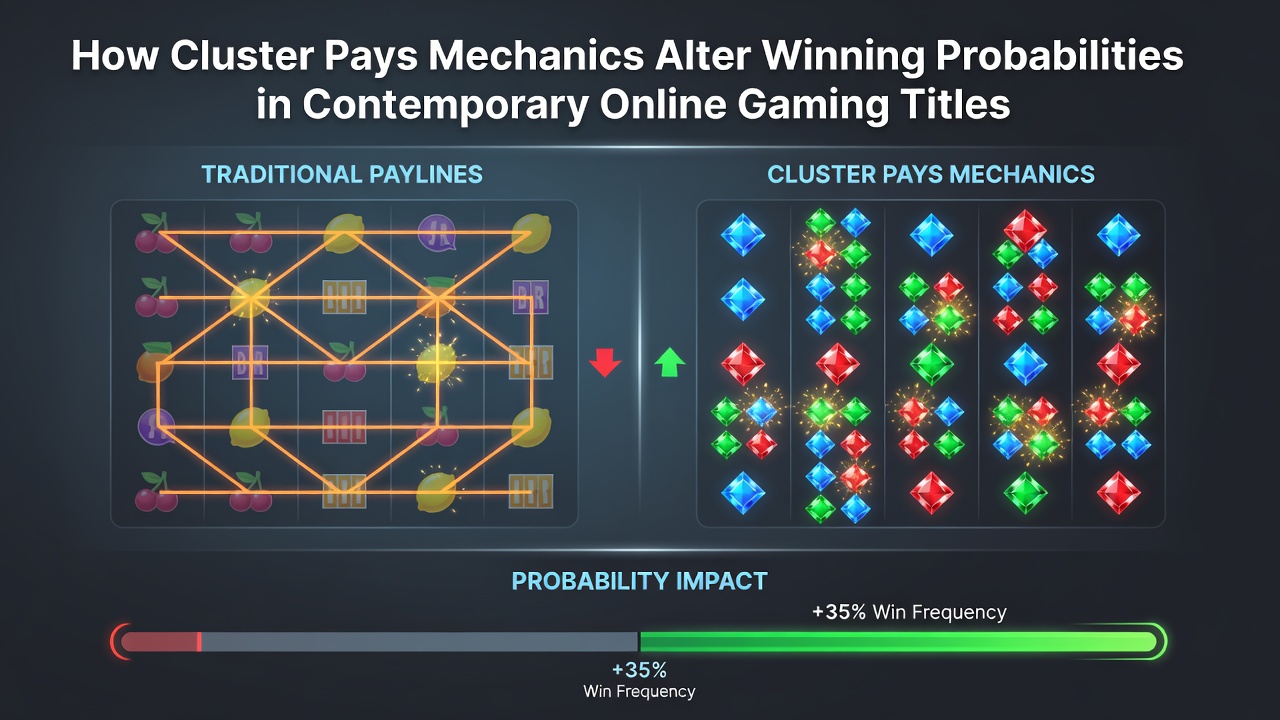
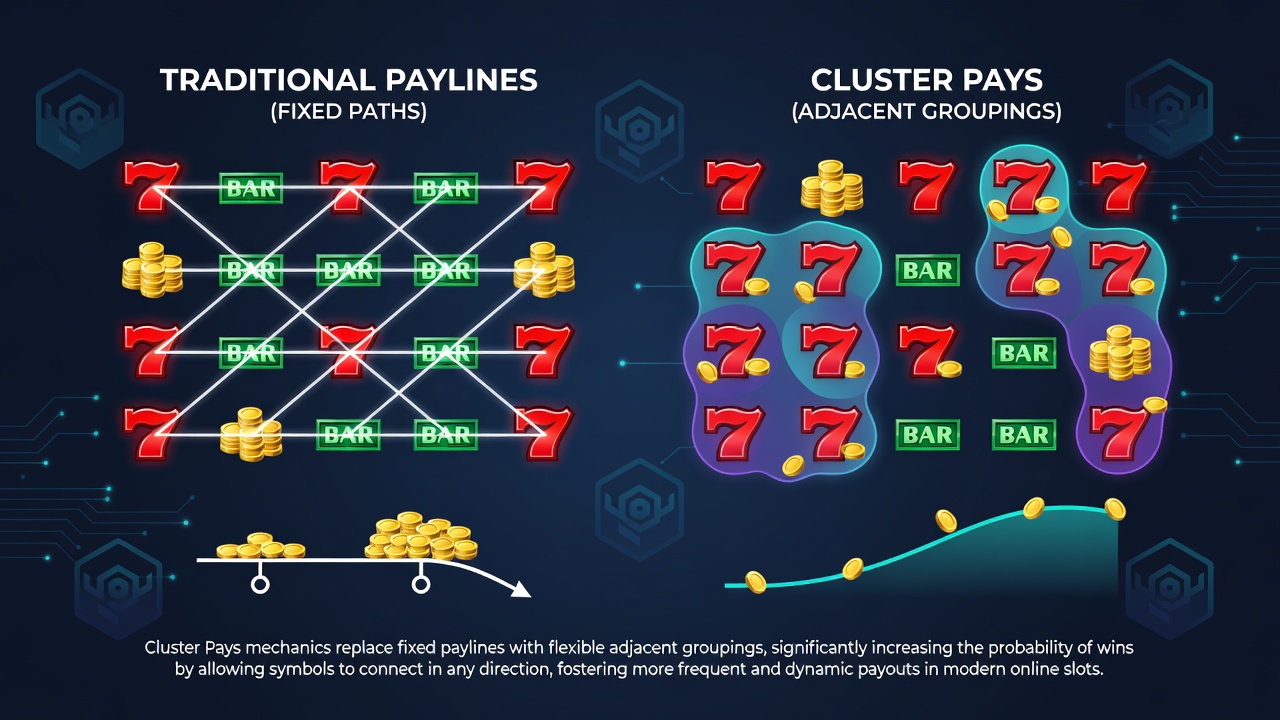
Cluster pays mechanics have become a standard feature across many online gaming titles released since the mid-2010s, and developers continue to refine these systems through 2026. Instead of fixed paylines, wins register when identical symbols land in adjacent positions forming groups of five or more, often expanding across the entire grid. This structural shift changes how random number generators calculate outcomes and how studios set return-to-player percentages during game certification.
Mechanics Behind Cluster Formation
Game engines evaluate every symbol position after each spin to identify connected groups, and this process replaces the linear checks used in older reel formats. Software must scan horizontally and vertically while sometimes allowing diagonal connections depending on the title's rules, which increases the total number of potential winning combinations per spin. Data from testing laboratories shows that cluster detection algorithms require additional processing cycles compared with payline verification, yet this does not affect the underlying randomness of symbol placement.
Probability Calculations in Grid-Based Systems
Traditional payline games limit wins to predetermined lines, so the probability of hitting a winning combination equals the number of lines multiplied by the chance of landing the required symbols on those lines. Cluster pays remove that restriction and instead treat the entire grid as a single evaluation area, which raises the base number of ways a win can occur but simultaneously requires larger symbol groups to trigger payouts. Research from independent testing houses indicates that studios adjust reel strips and symbol weights to maintain target RTP ranges, often lowering the frequency of high-value symbols to offset the increased number of possible clusters. As of August 2026, multiple titles certified in North American and European markets demonstrate RTP values between 94 and 97 percent despite using cluster mechanics, showing that the payout structure remains governed by the same regulatory standards applied to payline games.
Volatility and Hit Frequency Adjustments
Cluster-based games frequently display higher volatility because larger clusters produce bigger multipliers while smaller groups may fall below the minimum threshold for a payout. Observers note that hit frequency can rise when the minimum cluster size stays at five symbols, yet average win size tends to decrease unless cascading features remove winning symbols and allow new ones to drop into place. Figures released by the New Jersey Division of Gaming Enforcement reveal that several cluster titles approved in 2025 maintained hit rates between 25 and 35 percent, comparable to many payline games once symbol distribution and cascade logic are factored into the model.
Regulatory Oversight and Certification Standards
Certification bodies examine the random number generator output and verify that cluster detection code does not introduce bias toward particular symbol arrangements. The Malta Gaming Authority requires detailed mathematical reports that map every possible cluster size to its corresponding payout multiplier before granting market approval. Similar documentation must accompany submissions to regulators in Ontario and Australia, where authorities compare simulated outcomes against live play data to confirm that actual results align with theoretical probabilities. These checks ensure that the shift from paylines to clusters does not alter the fundamental fairness of the game, even though the visual presentation and winning patterns look different to players.
Implementation in Contemporary Titles
Studios integrate cluster pays into games with varying grid sizes, from the classic 5x5 layout to larger 8x8 or hexagonal arrangements introduced in 2024 and 2025 releases. Each configuration alters the total number of adjacent positions available for cluster growth, and developers publish paytable information that lists the exact multiplier awarded for clusters of five, six, seven symbols and beyond. Industry reports from the Canadian Gaming Association show that titles using 6x6 grids with cascade mechanics tend to produce more frequent small clusters while reserving higher multipliers for rare formations of eight or more matching symbols.
Conclusion
Cluster pays mechanics modify the spatial evaluation of wins without changing the core principles of random symbol generation or regulatory RTP requirements. Data from multiple jurisdictions demonstrates that probability adjustments occur through symbol weighting and minimum cluster thresholds rather than through any alteration to the random number generator itself. Players encounter different visual patterns and payout structures, yet the underlying mathematics remains subject to the same certification processes applied to all online gaming titles.